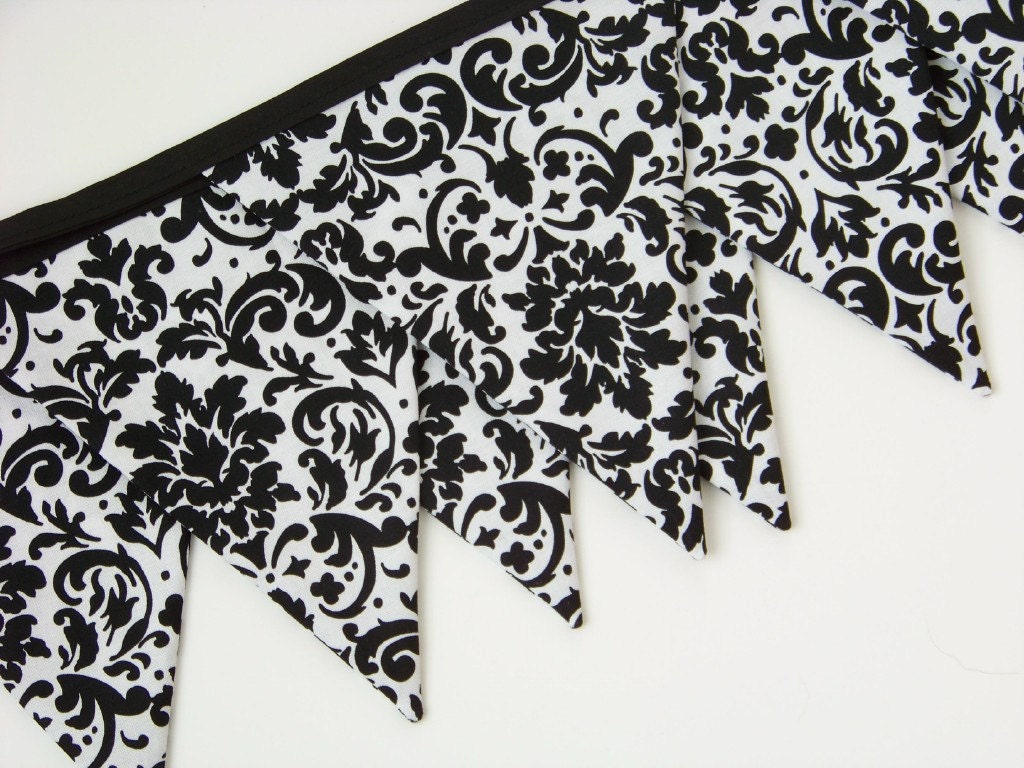
Damask fabric is said to have been created in Damascus, Syria. Damask fabric can be identified by its striking pattern. Damask fabric is multi-functional and that is why we love it at Sew Moni we love Damask.
Showing posts with label Textile. Show all posts
Monday Monday
Monday, November 15, 2010
Happy Mondays guys and gals!
Just wanted to let you in on some exciting things that will be taking place this month.
Moni and I will be back at the Astoria Market next Sunday (November 21st) at Bohemian Hall. We enjoyed getting to know the Queens neighborhood and loved showcasing our new line of sewing patterns. This coming Sunday, we will have plenty of items to stock up for your next craft project including fat quarters, patterns, vintage buttons and trims. We will also have some great gift items too! Come pick out a handmade apron, tote, cosmetic bag, lovely skirts, reworked vintage jewelry, or a hand-poured soy candle. Enjoy next Sunday with us and other crafty vendors at Bohemian Hall 12pm-5pm; it's off of the NQ Astoria Boulevard stop.
In other news, we are proud to announce that the SEW Moni store front will be up and running come December! Get ready to sew and craft as we will be offering more classes, great sewing notions and tools, as well as handpicked fabrics. Stay tuned for more updates for the next few weeks!
Yours truly,
Katie
Labels:
basic sewing,
classes,
Craft Fair,
Craft Show,
education,
events,
Fabric,
group sewing,
sew MONI,
Textile
Textile Tuesdays Present: Seersucker
Tuesday, July 13, 2010
With this wonderful heat wave that has swept through New York this past week, my mind couldn't help but wonder to the cooler fabrics of summer. One of my personal favorites is seesucker.
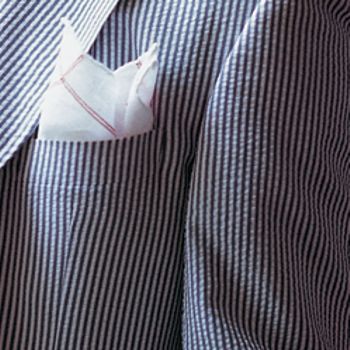
Usually made of 100% cotton, this woven sports a rippled or wrinkled appearance making it great for relaxed summer wear. The fabric ripples are created in the weaving process, called slack-tension weave. The use of tightly woven, heavy-weight warp yarns and loosely woven light-weight weft and warp yarns created the unique texture of seersucker.
The weaving pattern creates a stripped or plaid design in the fabric. The name seersucker originates from the Persian words for milk and sugar (shir or shekar) in reference to the smooth and bumpy texture. The rippled texture actually keeps the fabric from clinging to the skin and allows air flow between the skin and fabric to keep you nice and cool. Also, since it's already wrinkled, there is no need to iron before wearing, just get up and go. Seersucker is featured in children's clothing, suiting, shirts, skirts, pants, and shorts.
So go with the summer time flow and whip up a couple of dresses or skirts to keep you cool this season!
Happy Sewing!
-Katie
Textile Tuesdays Present: Organza
Tuesday, July 6, 2010
Organza is traditionally made of 100% silk, but is also created with synthetic filament yarns like polyester, nylon, acetate, and viscose. These filament fibers also give organza a slight resilience and resistance to being bent or folded making it perfect for billowy or structural garment/upholstery designs. Because of its looser weave, the fabric is light weight and has a transparent appearance. You can find them in any color, some with metallic threads, some embroidered, or some embossed.
Organza is created in the mills of China, India, France, Italy and the United States. Each mill boasts a specific type of organza. Chinese organza is mostly created with 100% silk. Indian and American organzas generally use synthetic fibers like polyester and nylon. However, organza from France and Italy is a bit more sturdy with a blend of nylon and silk yarns.
Silk organza is commonly used in bridal wear and evening wear. Whereas synthetic organzas are used for everyday interior purposes like curtains and accent pillows. Synthetic organza, especially the embroidered, embossed, or metallic designs, has even made its way onto table settings as a layering cloth to bring drama, color, and life to receptions and dinner parties.
Speaking of dinner parties, I remember my grandmother wearing an organza pin-apron while preparing for a summer seafood dinner. It was so beautiful and the use of organza made a common/functional item into something beautiful, beyond the confines of everyday duties like cooking and cleaning. She got quite a few compliments that night if I can remember correctly.
Happy Sewing!
-Katie
Labels:
Brooklyn,
clothing construction,
Fabric,
sewMONI,
Textile
Textile Tuesdays Present: Batik
Tuesday, June 29, 2010
This Indonesian dying technique has been found in several other cultures in India, the Middle-East, Africa, and parts of Asia. Known for its hand-worked prints, this fabric depicts stories and expresses cultural art unique to its individual creators.
The majority of Batiks start with a plain weave cotton fabric and are made unique by using resistant dye methods. Silk and rayon fabrics are also a commonly printed on. This method alternates the use of waxes and natural dyes to create all over patterns, directional patterns, single scenes and motifs. Patterns are applied via stencils, carved stamps, and hand painting making it very personal and specific to the artist and region.
Use this fabric to create a bold statement in a dress or an eclectic addition to your home with a Batik wall hanging, a set of throw pillows, or if you're up to the challenge a quilt.
-Katie
Labels:
Batik,
Fabric,
Indonesian,
Resist Dye,
sew MONI,
Textile
Subscribe to:
Posts (Atom)